
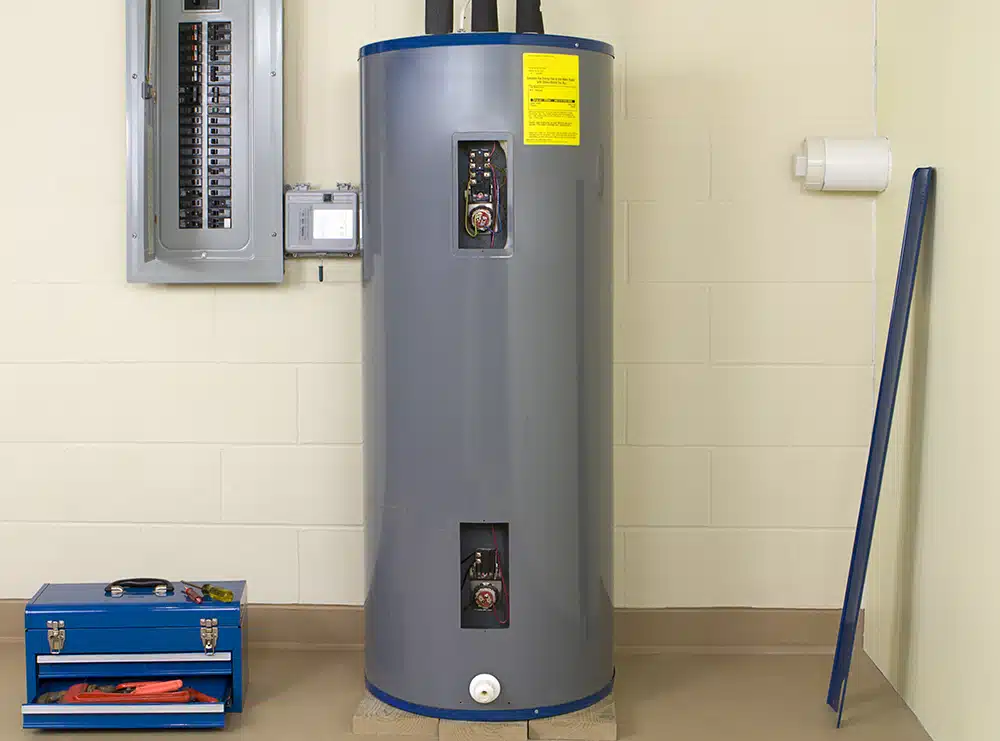
Most water heaters don’t just quit without warning. They grumble, leak, and underperform for months before finally calling it quits. The problem is that most homeowners in Greer don’t catch those signals until they’re standing in a cold shower or mopping up a flooded utility closet.
KT Plumbing has seen this play out more times than we can count. A little knowledge upfront can save you a lot of money and a whole lot of stress. Here’s what your water heater might be trying to tell you.
This is usually the first thing people notice. You used to be able to shower, run the dishwasher, and still have hot water to spare. Now the shower goes lukewarm halfway through.
Reduced hot water capacity is often a sign of sediment buildup on the heating elements, a failing thermostat, or a tank that’s just worn out. If you have a 40-gallon tank and it’s behaving like a 20-gallon, something’s wrong.
Clean, properly functioning water heaters produce clear, odorless hot water. If yours is delivering rusty, brownish water or something that smells like sulfur or rotten eggs, pay attention.
Rusty or discolored water often means corrosion is happening inside the tank. Once the interior lining starts to go, the tank isn’t far behind. A sulfur smell typically points to bacteria growth inside the unit, which is more common when it hasn’t been used in a while or when the temperature is set too low.
Either issue warrants a call to a plumber. If it’s corrosion, you’re likely looking at replacement rather than repair.
Water heaters aren’t silent, but they shouldn’t be loud. If yours has started popping, rumbling, or banging, sediment is almost certainly the culprit.
Over time, minerals in the water settle at the bottom of the tank. As that layer builds up and gets repeatedly heated, it hardens and creates those knocking sounds you’re hearing. Beyond being annoying, heavy sediment forces the heater to work harder, shortens its lifespan, and can eventually cause overheating or cracks. Routine water heater maintenance — including periodic flushing — can prevent this from becoming a bigger problem.
Puddles, drips, or any visible dampness around your water heater deserve immediate attention. Don’t assume it’s just condensation.
Small leaks around fittings or valves can sometimes be tightened or repaired. But moisture coming from the tank itself usually signals a crack or corrosion that’s only going to get worse. A leaking tank doesn’t repair itself, and a slow drip can become a burst tank faster than you’d expect.
Check around the base, the inlet and outlet connections, and the pressure relief valve. If the pressure relief valve is dripping, that could indicate excessive pressure in the system — a separate issue worth addressing right away.
How old is your water heater? Most tank-style units last 8 to 12 years with normal use. If you’re not sure, check the serial number on the manufacturer’s label. Most brands encode the manufacture date in the serial number, and a quick search for your brand’s format will decode it.
Once a unit crosses the 10-year mark, even if it’s technically working, it’s worth planning for replacement rather than waiting for a failure. Older units are less efficient, more expensive to run, and repairs start to cost more than they’re worth.
If your hot water is inconsistent from one use to the next, the thermostat or heating element may be failing. In electric units, elements can burn out partially, leaving you with lukewarm instead of hot. In gas units, a failing thermocouple or burner assembly can cause similar issues.
These are sometimes repairable, especially in newer units. But if the heater is already aging and the repair bills are stacking up, replacement often makes more financial sense.
Any of the signs above are worth a phone call. Some issues are minor and fixable with a repair. Others mean the unit is on its way out and continuing to patch it is just throwing money at a problem you’ll have to replace anyway.
The team at KT Plumbing handles everything from water heater repair to full replacement and can give you an honest read on which direction makes sense. If you’re in Greer and something feels off with your hot water, reach out here and we’ll take a look.
Book an appointment online today to get a skilled plumber to fix your problem!
Book Online Book Online